

Conservation Consciousness: Yangtze Finless Porpoise

Updated: Jun 6
The Yangtze finless porpoise is the only freshwater porpoise in the world, and it's facing extinction seeing as only 1,400 individuals are left in the wild. What can we do to help preserve the species and its habitat?
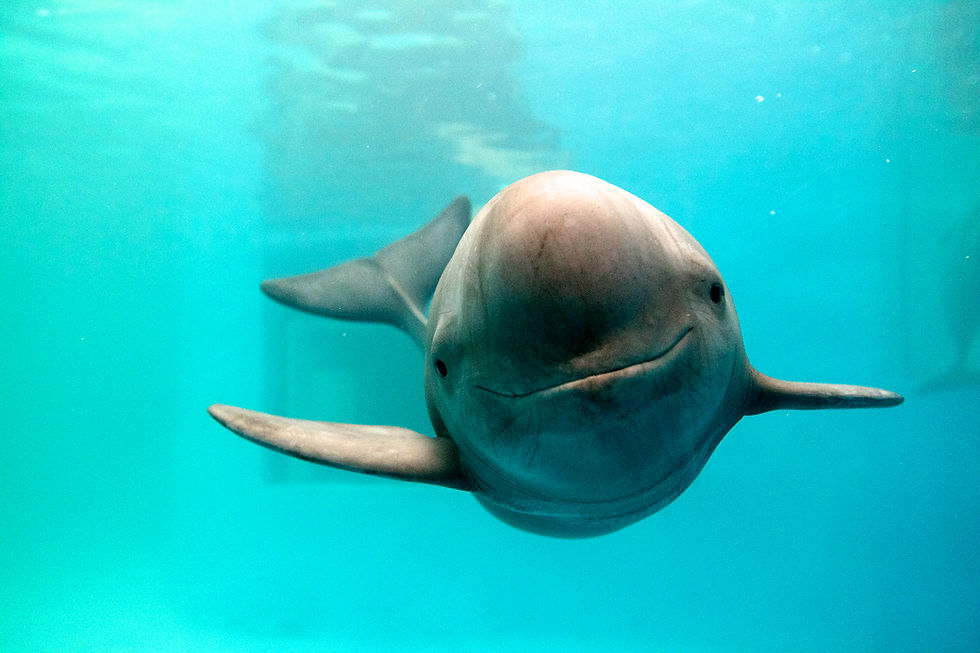
Porpoises are close relatives of dolphins; they're both fully aquatic toothed whales that use echolocation. Though, this type of whale lacks the dolphin's signature elongated beak and instead has a very small, round head. The Yangtze Finless Porpoise in particular, as the name suggests, lacks a dorsal fin and has a ridge covered in tiny bumps instead. Since the water tends to be cloudy, they rely on echolocation primarily rather than sight so they can hunt fish, shrimp, and squid. They use the fatty part of their heads, called the melon, to aim sound waves at objects. Unlike most cetaceans, this species of porpoise can smile due to its unique mouth shape, and it's nicknamed the giant panda of the water! These individuals live exclusively in China's Yangtze River, the longest river in all of Asia, which makes them vulnerable to environmental threats. Construction of the Three Gorges Dam, pollution, shipping traffic, and overfishing have all contributed to their huge decline in numbers, as they struggle to use echolocation and suffer a diminished food supply.
What Is Being Done?
One of the main conservation efforts is the establishment of seven natural and two semi-natural reserves for the porpoises
A small group of porpoises were rescued by the Institute of Hydrobiology of the Chinese Academy of Sciences; they were then introduced into the new reserves and bred successfully
This porpoise once shared its home with the Yangtze river dolphin, which went extinct in 2007. Despite the overwhelming odds, the creation of new sanctuaries has halted the rate of decline since 2020
A 10-year fishing ban has been enforced in parts of the Yangtze so that this species not only has more of a food source, but also doesn't struggle with echolocation due to boat overcrowding
What Can You Do To Help?
Donate to the World Wildlife Fund, the world's largest conservation organization that works to restore biodiversity through policy, sustainable practices, and technology
Support the fishing ban to help restore the Yangtze River's ecosystem
Spread awareness about this critically endangered species; the more mainstream an issue is, the more likely resources will be allocated in order to fix it
Choose sustainable seafood to avoid supporting overfishing
Helping to save the Yangtze Finless Porpoise is not only beneficial to the species itself, but the entire ecosystem and the 400 million people who depend on the Yangtze River. The porpoise acts as the ultimate indicator of the river's overall health, as many species depend on this animal as an essential part of the food web. While the future is looking up for this cetacean, the species will not be able to fully recover without your help. Continue to support Bayou Barrels to learn about how you can help critically endangered species!
Sources:
“Milestone in Race to Save Yangtze Finless Porpoise | WWF.” World Wildlife Fund, 23 Mar. 2015, wwf.panda.org/wwf_news/?242311/Milestone-in-race-to-save-Yangtze-finless-porpoise.
“Yangtze Finless Porpoise - River Dolphins.” River Dolphins - Protecting River Dolphins Worldwide, 22 Nov. 2023, www.riverdolphins.org/river-dolphins-worldwide/yangtze-finless-porpoise/.


Illuminating!